
Vulnerability Spotlight: Use-after-free vulnerabilities in Foxit Reader could lead to arbitrary code execution
Cisco Talos recently discovered several use-after-free vulnerabilities in Foxit Reader that could lead to arbitrary code execution. The Foxit Reader is one of the most popular PDF document readers, which aims to have feature parity with Adobe’s Acrobat Reader. As a complete and

Threat Spotlight: Cyber Criminal Adoption of IPFS for Phishing, Malware Campaigns
* The InterPlanetary File System (IPFS) is an emerging Web3 technology that is currently seeing widespread abuse by threat actors. * Cisco Talos has observed multiple ongoing campaigns that leverage the IPFS network to host their malware payloads and phishing kit infrastructure
Microsoft Patch Tuesday for November 2022 — Snort rules and prominent vulnerabilities
Microsoft released its monthly security update on Tuesday, disclosing 62 vulnerabilities. Of these vulnerabilities, 8 are classified as “Critical” and the rest are classified as “Important.”
Emotet coming in hot
Emotet is a ubiquitous and well-known banking trojan that has evolved over the years to become a very successful modular botnet capable of dropping a variety of other threats. Even after a global takedown campaign in early 2021 disrupted the botnet, it reemerged later that year,

The Company You Keep – Preparing for supply chain attacks with Talos IR
Organizations must proactively limit supply chain risks through careful selection of the company they keep while preparing to respond to an incident that will invariably originate from the supply chain.
Threat Roundup for October 28 to November 4
Today, Talos is publishing a glimpse into the most prevalent threats we've observed between Oct. 28 and Nov. 4. As with previous roundups, this post isn't meant to be an in-depth analysis. Instead, this post will summarize the threats we've observed by highlighting ke

Threat Source newsletter (Nov. 3, 2022): Mastodon, evolution, and LiveJournal oh my!
Welcome to this week’s edition of the Threat Source newsletter. I’m fascinated by how things live and die on the internet. Things that are ubiquitous to our daily lives are simply gone the next. LiveJournal and Myspace we hardly knew you. Elon Musk’s purchase of Twitter and the

Threat Advisory: High Severity OpenSSL Vulnerabilities
In late October two new buffer overflow vulnerabilities, CVE-2022-3602 and CVE-2022-3786, were announced in OpenSSL versions 3.0.0 to 3.0.6. These vulnerabilities can be exploited by sending an X.509 certificate with a specially crafted email address, potentially causing a buffer
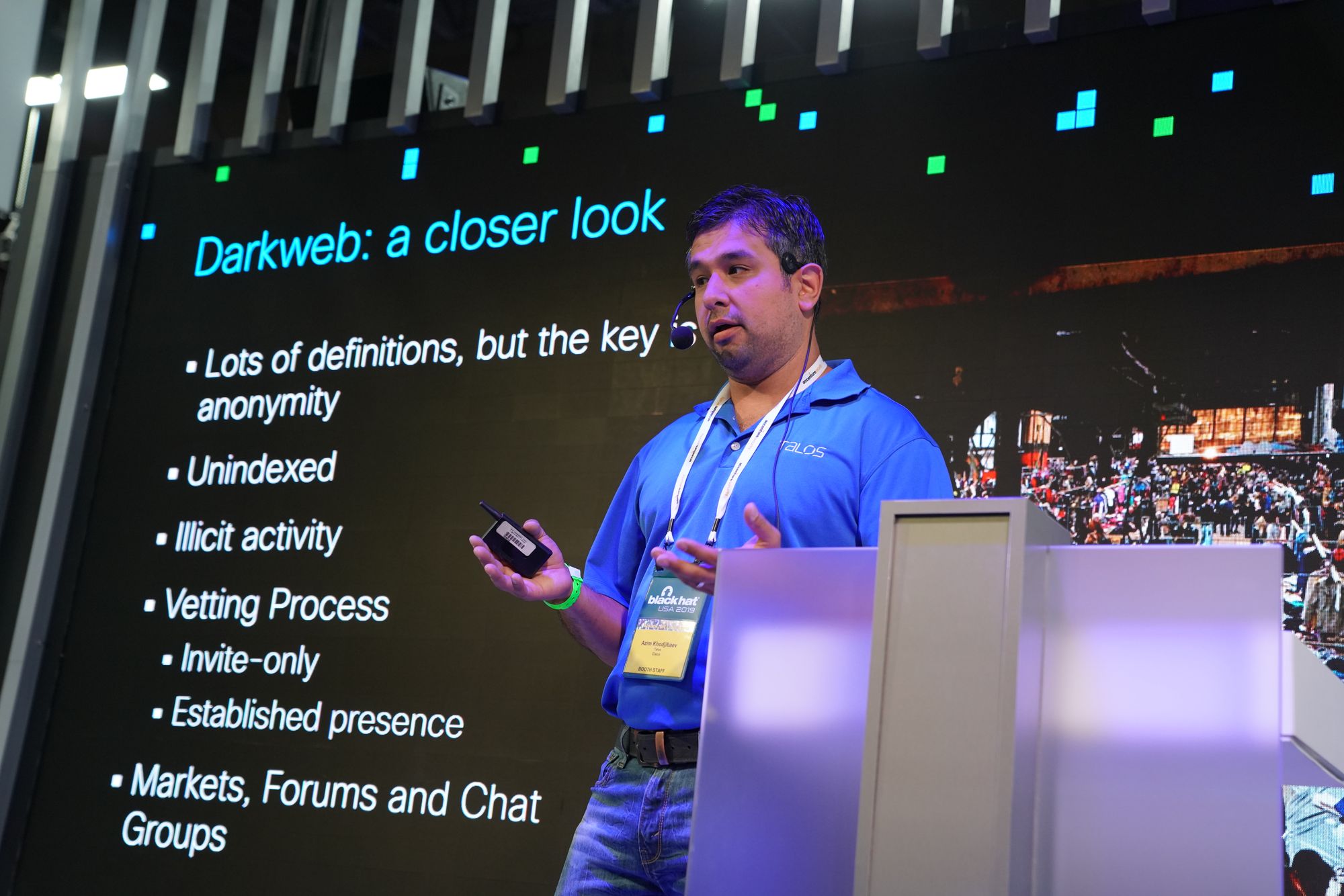
Researcher Spotlight: How Azim Khodjibaev went from hunting real-world threats to threats on the dark web
Most of the time, Khodjibaev is combing through various dark web forums, ransomware group chats, Russian-speaking websites and other sources trying to learn of attackers’ next moves.